

DAY 4 — The Spiritual Power of Fasting in Purushottam Maas How Upvas Purifies the Mind, Body, and Soul


Introduction
In Sanatan Dharma, fasting is not viewed as merely avoiding food. True fasting, or Upvas, is a sacred spiritual discipline that helps a person move closer to God. During Purushottam Maas, fasting holds even greater importance because this holy month is completely dedicated to Lord Vishnu and spiritual purification.
The word Upvas itself carries deep meaning. “Up” means near, and “Vas” means to stay. Therefore, Upvas means “to stay close to the Divine.” It is not simply a physical practice but a spiritual journey that teaches self-control, discipline, purity, and devotion.
In today’s modern world, people are surrounded by distractions, stress, desires, anger, and constant mental noise. Purushottam Maas reminds devotees to slow down, calm the mind, and reconnect with spiritual consciousness through fasting, prayer, and devotion.
Ancient scriptures explain that fasting during this sacred month helps cleanse negative karma, improve mental clarity, and increase divine blessings. Saints and devotees throughout history have observed vrat and upvas as a powerful path toward spiritual awakening.
Why Fasting is Important in Purushottam Maas
Purushottam Maas is considered one of the holiest periods for spiritual discipline. During this month, devotees dedicate themselves to:
Vishnu Bhakti
Ekadashi fasting
Mantra chanting
Charity
Meditation
Reading sacred scriptures
Among all these practices, fasting is considered especially powerful because it helps control the senses and purify the mind.
Human beings often become attached to comfort, taste, habits, and material desires. Fasting teaches restraint and reminds devotees that true happiness does not come only from physical pleasure. It comes from inner peace and spiritual connection.
During Purushottam Maas, many devotees observe:
Ekadashi vrat
Fruit fasts
Satvik fasting
One-time meals
Avoidance of tamasic food
These practices are believed to increase spiritual energy and devotion toward Lord Vishnu.
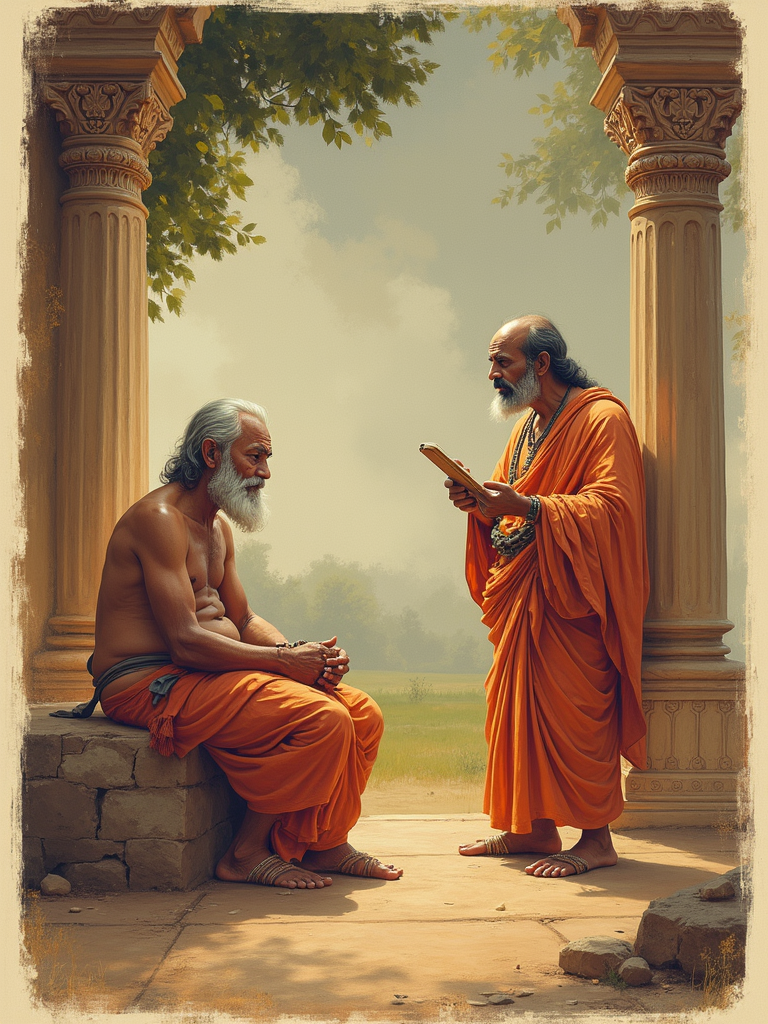
The Story of Sage and the Disciple
Long ago, there lived a young disciple who stayed in a peaceful ashram deep inside the forest. The disciple was sincere and eager to gain spiritual wisdom, but he struggled to control his mind.
Whenever he sat for meditation, his thoughts wandered constantly:
He thought about food
Comfort
Wealth
Desires
Anger
Fear
One day, the disciple approached his guru and said:
“Gurudev, I pray daily and listen to spiritual teachings, but my mind remains restless. How can I attain peace?”
The wise sage smiled gently and replied:
“The uncontrolled mind is like a wild horse. It must be disciplined through Upvas, prayer, and devotion.”
The disciple became confused.
He asked:
“How can fasting help the mind?”
The guru explained:
“When the body constantly chases pleasure, the soul becomes weak. Fasting teaches the senses to obey the spirit instead of controlling it.”
The guru instructed the disciple to observe a sacred fast during Purushottam Maas.
The Disciple’s Spiritual Struggle
The disciple began his vrat with enthusiasm.
On the first day, he felt confident. But slowly:
Hunger distracted him
Anger increased
Thoughts became restless
Desires arose repeatedly
At times he wanted to quit.
But every time his mind weakened, he remembered his guru’s words:
“Discipline creates inner freedom.”
The disciple continued chanting Vishnu mantras and spent time in silence and meditation.
Days passed.
Gradually, something began changing inside him.
His mind became calmer. His anger reduced. His thoughts became peaceful.
For the first time, he experienced deep inner silence.
The Spiritual Transformation
At the end of Purushottam Maas, the disciple returned to his guru with tears in his eyes.
He said:
“Gurudev, I finally understand. Fasting was never about punishing the body. It was about purifying the mind.”
The sage smiled and replied:
“True Upvas removes attachment and awakens divine consciousness.”
The disciple realized that:
Hunger comes and goes
Desires are temporary
But spiritual peace remains forever
From that day onward, he became deeply devoted to Lord Vishnu and spent his life helping others on the spiritual path.
Spiritual Meaning of Fasting
The story teaches that fasting is not simply about avoiding food.
True fasting means:
Controlling desires
Reducing negativity
Purifying thoughts
Strengthening discipline
Focusing on God
When a person fasts with devotion and sincerity, the mind slowly becomes calmer and more spiritually aware.
Types of Fasting During Purushottam Maas
Different devotees observe fasting in different ways according to their health and spiritual discipline.
Ekadashi Vrat
One of the most sacred fasts dedicated to Lord Vishnu.
Devotees avoid grains and spend the day in:
Prayer
Mantra chanting
Meditation
Bhagavad Gita reading
Phalahar Fast
Many devotees consume only:
Fruits
Milk
Dry fruits
Water
This keeps the body light and the mind peaceful.
Satvik Discipline
Some devotees avoid:
Onion
Garlic
Tamasic food
Anger
Negative speech
because spiritual fasting includes purity of thoughts and actions.
Benefits of Fasting
According to spiritual teachings, fasting during Purushottam Maas may:
Purify negative karma
Improve mental clarity
Increase self-control
Strengthen devotion
Calm emotional stress
Improve spiritual discipline
Fasting also reminds people to practice gratitude and simplicity.
Fasting in Modern Life
In today’s fast-paced world, people often feel:
Mentally exhausted
Emotionally stressed
Spiritually disconnected
Purushottam Maas teaches that sometimes slowing down is necessary for healing.
Fasting helps people:
Reduce distractions
Become mindful
Develop self-control
Reconnect with spirituality
Even small spiritual discipline can bring peace in daily life.
Importance of Intention in Upvas
Scriptures explain that fasting without devotion has little meaning.
The true purpose of Upvas is:
Bhakti
Purity
Self-control
Compassion
Spiritual awareness
A person who fasts but remains angry, egoistic, or negative misses the deeper purpose of the vrat.
True fasting transforms both:
The body
The heart
Mantra of the Day
📿 Chant 108 Times:
“Om Namo Narayanaya”
Meaning: “I bow before Lord Narayana.”
This sacred mantra is believed to:
Calm the mind
Remove negativity
Increase spiritual peace
Strengthen devotion to Lord Vishnu
Simple Day 4 Spiritual Practice
Today try to:
Eat simple satvik food
Avoid anger
Reduce unnecessary speech
Spend time in silence
Chant Vishnu mantra
Practice gratitude
Small spiritual habits create deep transformation over time.
Lessons from This Katha
The story of the disciple teaches:
Discipline creates freedom
The mind becomes peaceful through self-control
Spiritual strength grows slowly
True happiness comes from inner peace, not endless desires
Purushottam Maas reminds devotees that controlling the mind is one of the highest spiritual victories.
Conclusion
Fasting during Purushottam Maas is much more than a religious ritual. It is a sacred process of self-purification and spiritual awakening.
Through Upvas, devotees learn:
Patience
Discipline
Gratitude
Humility
Devotion
The practice of fasting teaches that the soul becomes stronger when the mind learns self-control.
In a world full of distractions and stress, Purushottam Maas gives humanity an opportunity to slow down, reconnect with spirituality, and experience inner peace.
May Lord Vishnu bless every devotee with discipline, peace, purity, and divine wisdom during this sacred Purushottam Maas.







Comments