

Ashtalakshmi Stotram – The Divine Power of Eight Forms of Goddess Lakshmi

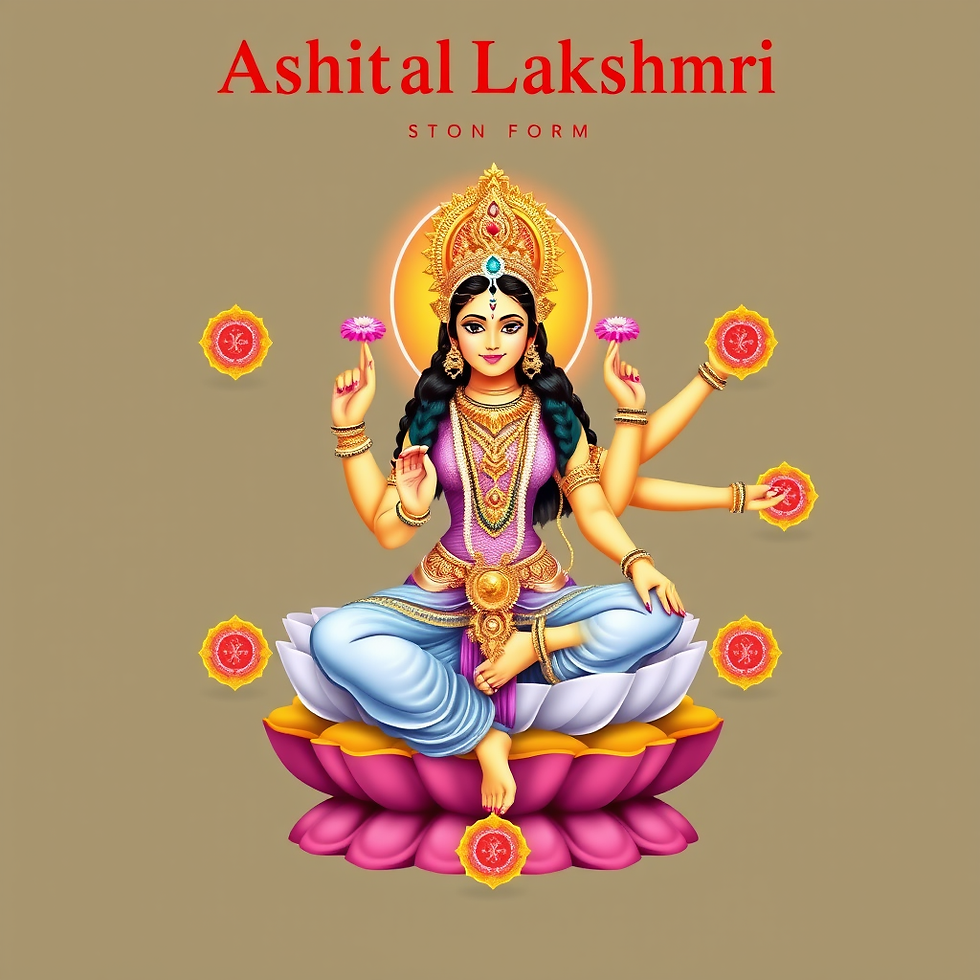
In the sacred traditions of Sanatan Dharma, Goddess Lakshmi is not worshipped only as the deity of wealth, but as the eternal source of prosperity, wisdom, courage, peace, nourishment, success, and spiritual abundance. The Ashtalakshmi Stotram is one of the most powerful devotional hymns dedicated to the eight divine manifestations of Maa Lakshmi, collectively known as Ashtalakshmi.
Each form of Lakshmi represents a different blessing required for a balanced and fulfilled life. Through this sacred stotram, devotees seek not only material prosperity but also spiritual upliftment, inner peace, and divine protection.
Meaning of Ashtalakshmi
The word “Ashta” means eight, and “Lakshmi” refers to the Goddess of prosperity and auspiciousness. Together, Ashtalakshmi signifies the eight sacred energies that sustain human life and spiritual growth.
The eight forms are:
Adi Lakshmi – The primordial Goddess and source of existence
Dhanya Lakshmi – Bestower of food, nourishment, and abundance
Dhairya Lakshmi – Giver of courage, patience, and strength
Gaja Lakshmi – Symbol of royal power, prosperity, and grace
Santana Lakshmi – Protector of children and family wellbeing
Vijaya Lakshmi – Goddess of victory and success
Vidya Lakshmi – Divine source of wisdom and knowledge
Dhana Lakshmi – Bestower of wealth and financial prosperity
Spiritual Importance of Ashtalakshmi Stotram
The Ashtalakshmi Stotram is more than a devotional prayer. It is a spiritual vibration that awakens positivity, removes negativity, and creates harmony in life. Ancient sages composed these verses to invoke divine energies that help devotees overcome fear, suffering, poverty, and obstacles.
When chanted with devotion, the stotram is believed to:
Bring peace and positivity into the home
Attract prosperity and abundance
Remove fear, stress, and negative energies
Increase wisdom, confidence, and spiritual awareness
Strengthen family harmony and relationships
Create a powerful devotional atmosphere during worship
The repeated phrase:
“जय जय हे मधुसूदन कामिनि…”
creates a deeply meditative and energetic vibration that fills the mind with devotion and surrender.
Best Time to Chant
Devotees often chant the Ashtalakshmi Stotram during:
Friday Lakshmi Puja
दीपावली (Diwali)
नवरात्रि
Varalakshmi Vratam
Daily morning meditation
Temple rituals and spiritual gatherings
Lighting a ghee lamp, offering lotus flowers, and chanting with a calm mind enhances the spiritual experience.
The Power of Sacred Sound
Sanskrit mantras and stotrams carry vibrational energy. The rhythmic chanting of the Ashtalakshmi Stotram helps align the mind and heart with higher consciousness. Many spiritual seekers today combine this sacred chant with meditative music inspired by yogic traditions and temple acoustics to create a deeply immersive spiritual experience.
Soft instruments like tanpura, veena, bamboo flute, temple bells, and mridangam help elevate the devotional mood while preserving the purity of the mantra.
Conclusion
The Ashtalakshmi Stotram is a timeless spiritual treasure of Hindu tradition. It reminds us that true prosperity is not limited to money alone, but includes wisdom, courage, peace, devotion, health, and spiritual fulfillment.
By chanting this sacred stotram with sincerity and devotion, one invites the divine grace of Maa Lakshmi into every aspect of life.
May the blessings of the eight forms of Lakshmi bring abundance, harmony, and spiritual light into your journey.
॥ जय माँ लक्ष्मी ॥




Comments